
Irene Amalia Salvo Agoglia
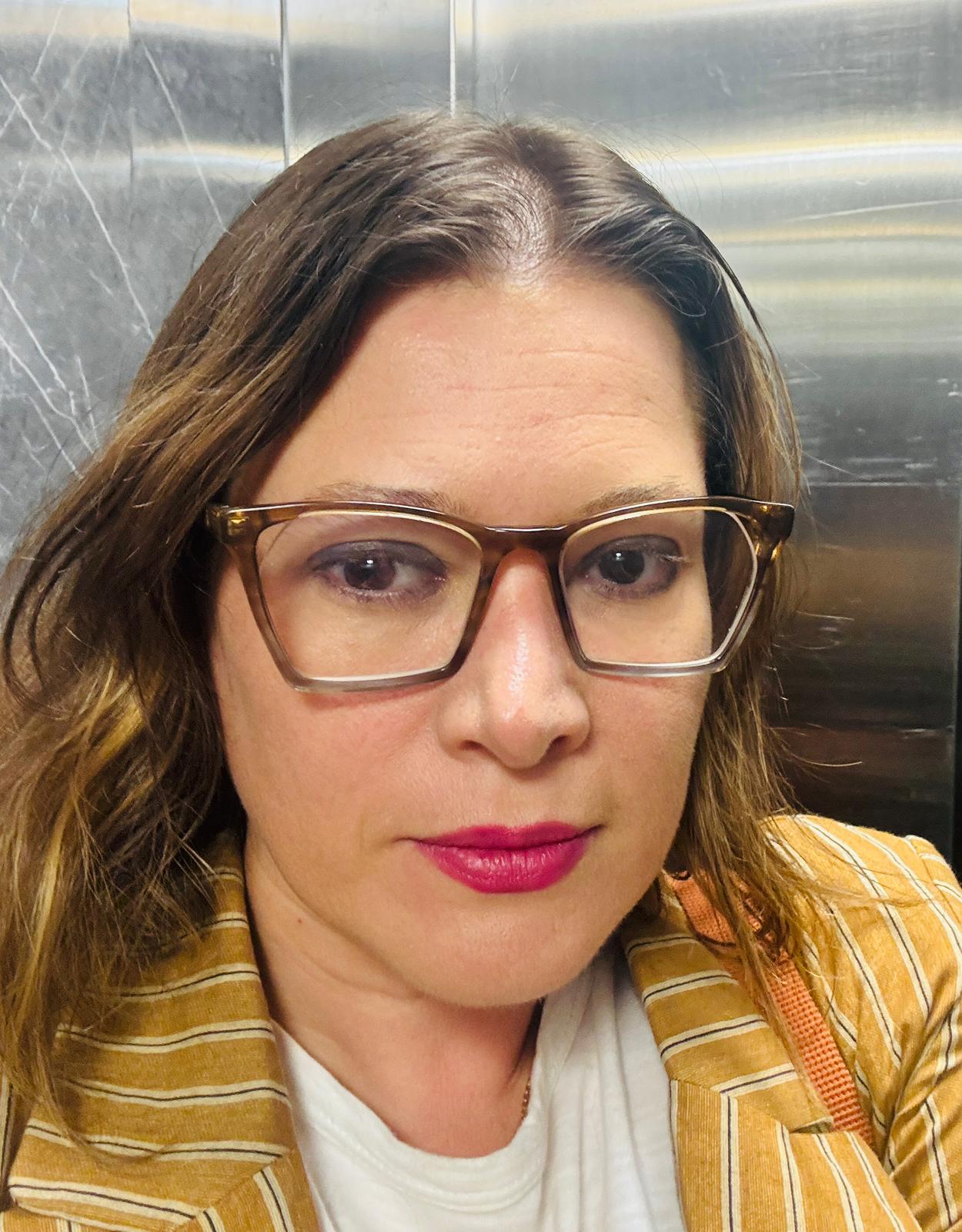
Irene Amalia Salvo Agoglia is a psychologist (University of Chile) with a Master’s degree in Family Sciences (University of Santiago de Compostela) and a PhD in Psychology (University of Buenos Aires). Since 2003, she has worked across psychotherapy, teaching, research, and consultancy, focusing on child protection, alternative care, and adoption.
As a university professor, she has taught undergraduate and postgraduate courses at institutions in Argentina (University of Buenos Aires, National University of La Plata), Chile (Universidad Alberto Hurtado, Universidad Católica Silva Henríquez, University of Chile, Universidad Mayor, Universidad de las Américas), and Spain (Autonomous University of Barcelona). In Chile, she holds the rank of Associate Professor (equivalent to Full Professor), and in Spain, she is accredited as Agregada by AQU Catalunya.
As a specialised consultant, she has collaborated with UNICEF, RELAF, FAI, and various public agencies in Chile and Latin America.
In the clinical field, she founded and coordinated GEDIFA (Family Diversity and Care Group), a pioneering initiative in specialised adoption services in Chile (CEAC–UCSH).
She also served as academic director and lecturer for the Diploma in Adoption (SENAME, 2015–2017), a unique and unprecedented training programme in the region. She has published scientific articles and technical materials and is the author of Pasado, presente y futuro de la adopción en Chile (UNICEF, 2025).
As a researcher, she has led several FONDECYT/ANID projects and was awarded both the Beatriu de Pinós Postdoctoral Fellowship (AGAUR–MSCA) and Marie Skłodowska-Curie Fellowship (MSCA, Horizon Europe) at the AFIN Research Group (Autonomous University of Barcelona), where she led the AdoptART project, focused on participatory, creative, and arts-based research with adopted people in Chile and Spain.
She is currently a Ramón & Cajal Senior Researcher in the Research Group on Socio-Educational Interventions with Children and Youth (GRISIJ), at the Department of Research Methods and Educational Diagnosis (MIDE), Faculty of Education, University of Barcelona. She also serves on the Editorial Board of Adoption Quarterly.
Email address: isalvoagoglia@ub.edu
Publications on intercountry adoption
Salvo Agoglia, I.S., LaBrenz, C. & Piché, AM. (2025). A Better Adoption? Evolution, Challenges, and Projections of Chilean Adoption Policies and Practices. Child & Adolescence Social Work Journal. Online first. https://doi.org/10.1007/s10560-025-01016-y
Salvo Agoglia, I. & Gesteira, S. (2024). ««Je m’appelle… » : Récits sur les noms propres des personnes adoptées au Chili et en Argentine», Enfances Familles Générations 45. URL: http://journals.openedition.org/efg/19968
Alfaro Monsalve, K. & Salvo Agoglia, I. (2023). ¿Falta cariño en Chile? Discursos sobre el amor y abandono materno en las adopciones irregulares de niños y niña pobres en la dictadura militar chilena. Revista del Museo de Antropología, 16(2), 355-368. http://doi.org/10.31048/1852.4826.v16.n2.38902
Salvo Agoglia, I., Gesteira, S. & Clemente-Martínez, Ch. (2023). Perfect strangers: searches and reunions between adult adoptees and their birth siblings in Chile, Argentina and Spain. Disparidades. Revista de Antropología 78(2): e022 (Q4). https://doi.org/10.3989/dra.2023.022
Gesteira, S., Salvo Agoglia, I., Villalta, C. & Alfaro, K. (2021). Child Appropriations and Irregular Adoptions: Activism for the “Right to Identity”, Justice, and Reparation in Argentina and Chile. Childhood 28(4), 585–599. https://doi.org/10.1177/09075682211028648
Salvo Agoglia, I. & Marre, D. (2020). Children Forever: The Search for Origins among Chilean Adults Who Were Adopted. Child & Family Social Work. Q2. http://dx.doi.org/10.1111/cfs.12666
Salvo Agoglia, I. & Alfaro Monsalve, K. (2019). “Irregular Adoptions” in Chile: New Political Narratives About the Right To Know One’s Origins. Children & Society 33(3), 201-212. https://doi.org/10.1111/chso.1232
Salvo Agoglia, I. & San Román, B. (2019). (Re)visitando a la madre (des)naturalizada: búsquedas y encuentros entre personas adoptadas en Chile y sus madres de origen. Q1. Revista de Estudios Sociales 68, 75-87. https://doi.org/10.7440/res68.2019.07